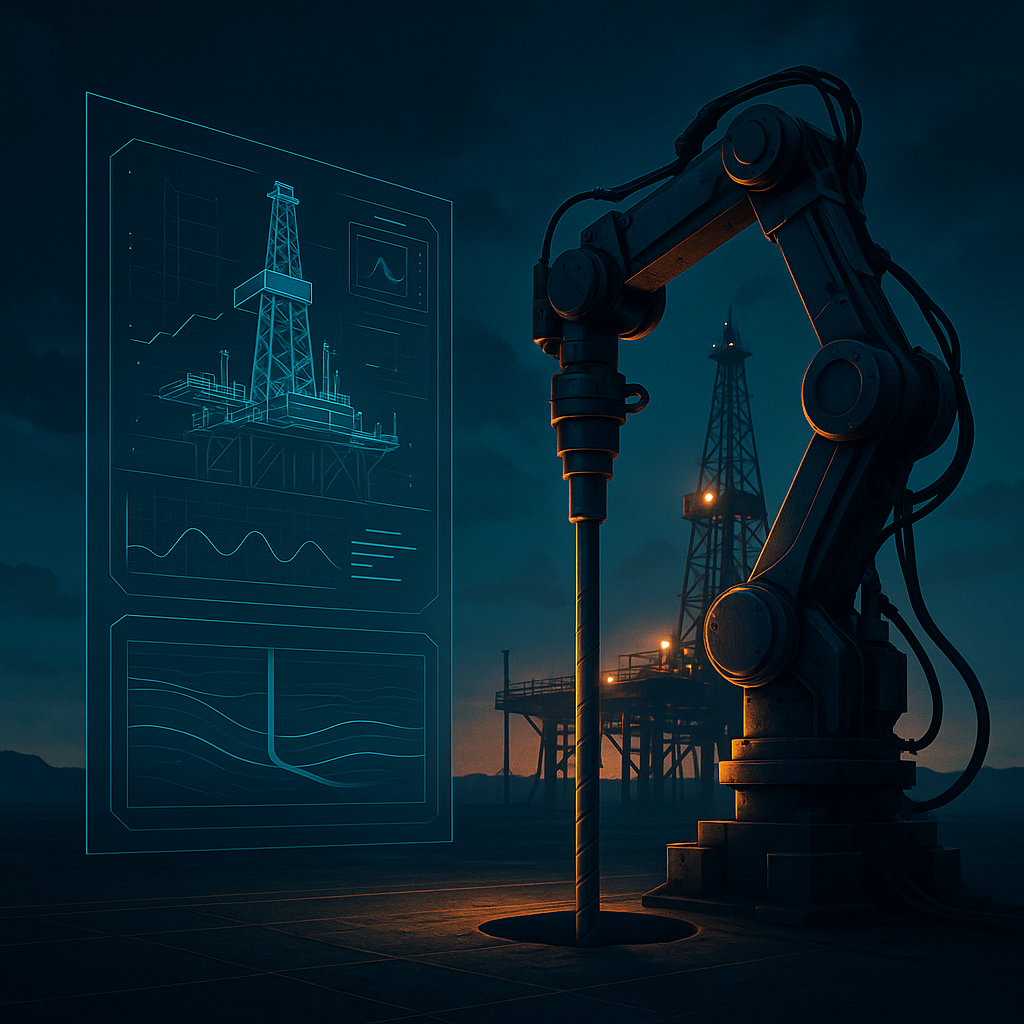
Impact of AI in Full Automatic Control of Drilling
Introduction
The oil and gas industry is undergoing a significant transformation due to advancements in artificial intelligence (AI). Full automatic control of drilling operations is one of the most promising applications of AI, enhancing efficiency, safety, and cost-effectiveness. In this blog post, we will explore the impact of AI in drilling automation, focusing on its benefits, challenges, and practical applications for geosteering engineers, drilling engineers, and petrophysicists. We will also reference pertinent research and standards from the Society of Petroleum Engineers (SPE) and Energistics.
The Role of AI in Drilling Automation
1. Enhanced Decision-Making
AI algorithms can process vast amounts of real-time drilling data, allowing for rapid decision-making. This capability enables geosteering engineers to optimize well placement and trajectory in response to changing geological conditions. According to SPE paper 197996, “AI-Driven Real-Time Geosteering: Maximizing Well Performance,” the integration of AI in geosteering can lead to significant improvements in wellbore placement accuracy, ultimately enhancing hydrocarbon recovery (SPE, 2019).
2. Predictive Maintenance
AI technologies can predict equipment failures before they occur, minimizing downtime and maintenance costs. Drilling engineers can leverage AI-powered predictive analytics to schedule maintenance based on usage patterns and performance data. A study published in the Journal of Petroleum Science and Engineering discusses how machine learning models can predict drill bit wear and optimize replacement schedules, thereby enhancing operational efficiency (Khan et al., 2020).
3. Automation of Drilling Parameters
AI can automatically adjust drilling parameters such as weight on bit (WOB), rotary speed, and mud flow rate in real-time. This level of automation helps maintain optimal drilling conditions, reducing the risk of issues such as stuck pipe or lost circulation. The SPE paper 196882 highlights how automated drilling systems, utilizing AI, can adapt to real-time data input, ensuring smooth operations even in challenging environments (SPE, 2019).
4. Integration with Existing Technologies
AI can seamlessly integrate with existing drilling technologies and standards. For instance, WITSML (Wellsite Information Transfer Standard Markup Language) facilitates data exchange between drilling systems, allowing AI applications to utilize data from multiple sources. This integration enhances data accessibility and supports more informed decision-making. The Energistics standards promote interoperability across software platforms, ensuring that AI tools can function effectively in diverse environments (energistics.org).
Practical Application
In practical terms, geosteering engineers can utilize platforms like GeoSteering Workspace to analyze real-time data and make informed decisions based on AI-powered insights. For instance, using LookAhead technology, engineers can anticipate geological changes and adjust the drilling trajectory accordingly. Moreover, DrillTracker allows for the monitoring of drilling parameters in real-time, enabling engineers to react swiftly to any deviations from the planned drilling operation.
AI applications like GeoEngine AI can assist in automating data interpretation, leading to more accurate geological models. By integrating WITSML data, engineers can have a comprehensive view of both operational and geological parameters, ensuring that all decisions are data-driven.
Summary
The impact of AI in the full automatic control of drilling is profound. From enhancing decision-making and predictive maintenance to real-time parameter adjustments, AI is reshaping the landscape of drilling operations. The integration of AI with existing standards and technologies ensures that geosteering engineers, drilling engineers, and petrophysicists can leverage these innovations for improved operational efficiency and safety.
For professionals looking to harness the power of AI in their drilling operations, GeoMaster offers a suite of tools that facilitate this transition seamlessly.
GeoMaster handles this natively — Start your free trial.