On 5 November 2026 we presented "Agentic AI and Machine Learning: Real-Time Structural and Stratigraphic Interpretation of LWD Data in Horizontal Wells" at the London Petrophysical Society (LPS) New Technology Seminar in London. This article walks through the main ideas for those who could not be in the room.
The problem: AI without context
Before building anything, we spoke with more than 20 interpretation experts. None of them trusts automated interpretation today, and they gave the same reason: to get the best possible correlation with the logs, automated interpretation creates faults out of nowhere.
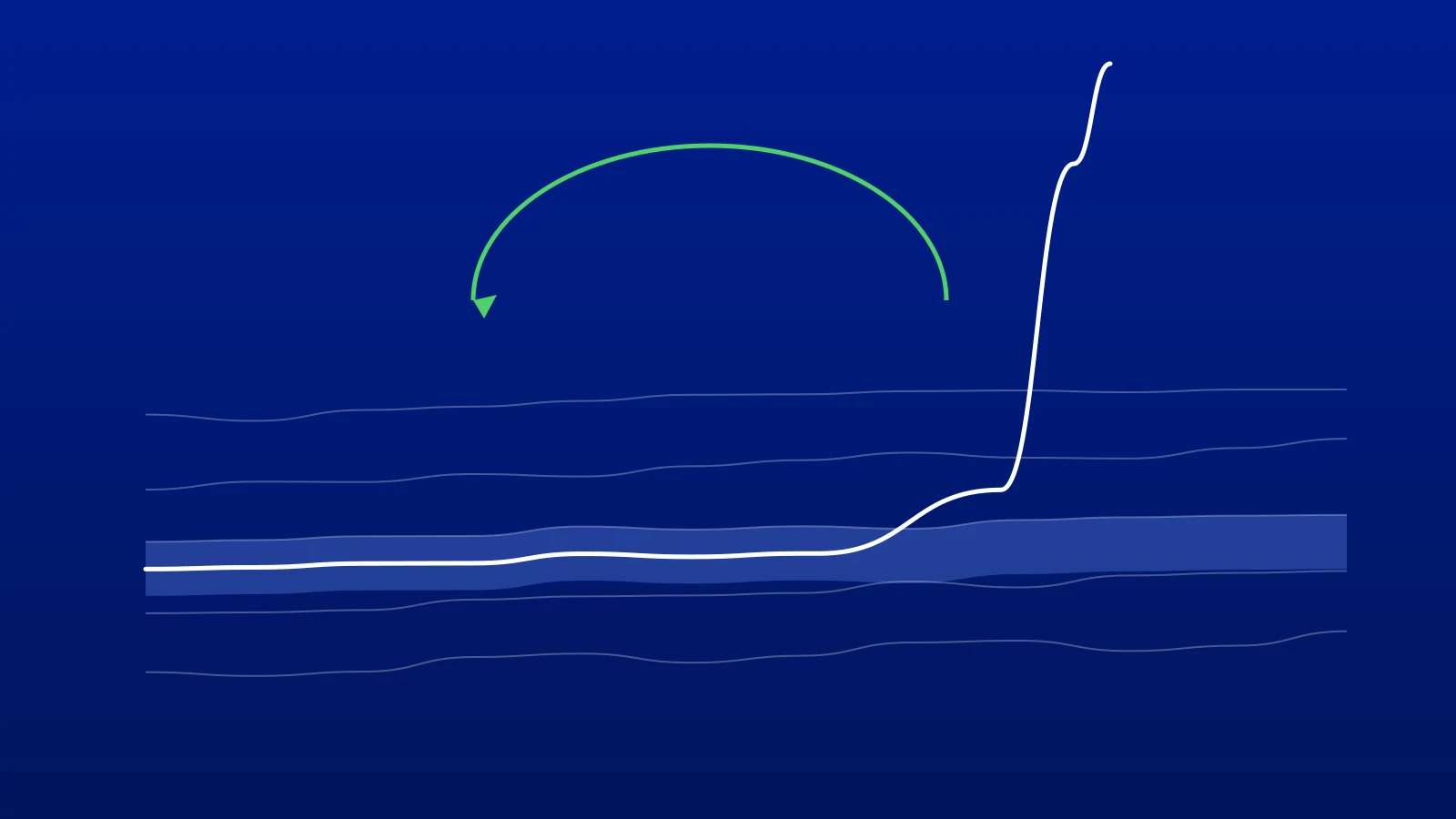
We showed a real example from a horizontal well. Autosteer's interpretation needs dips of up to 49° and fault throws of up to 40 m between segments. It matches the log well, but no geologist would accept the structure behind it.
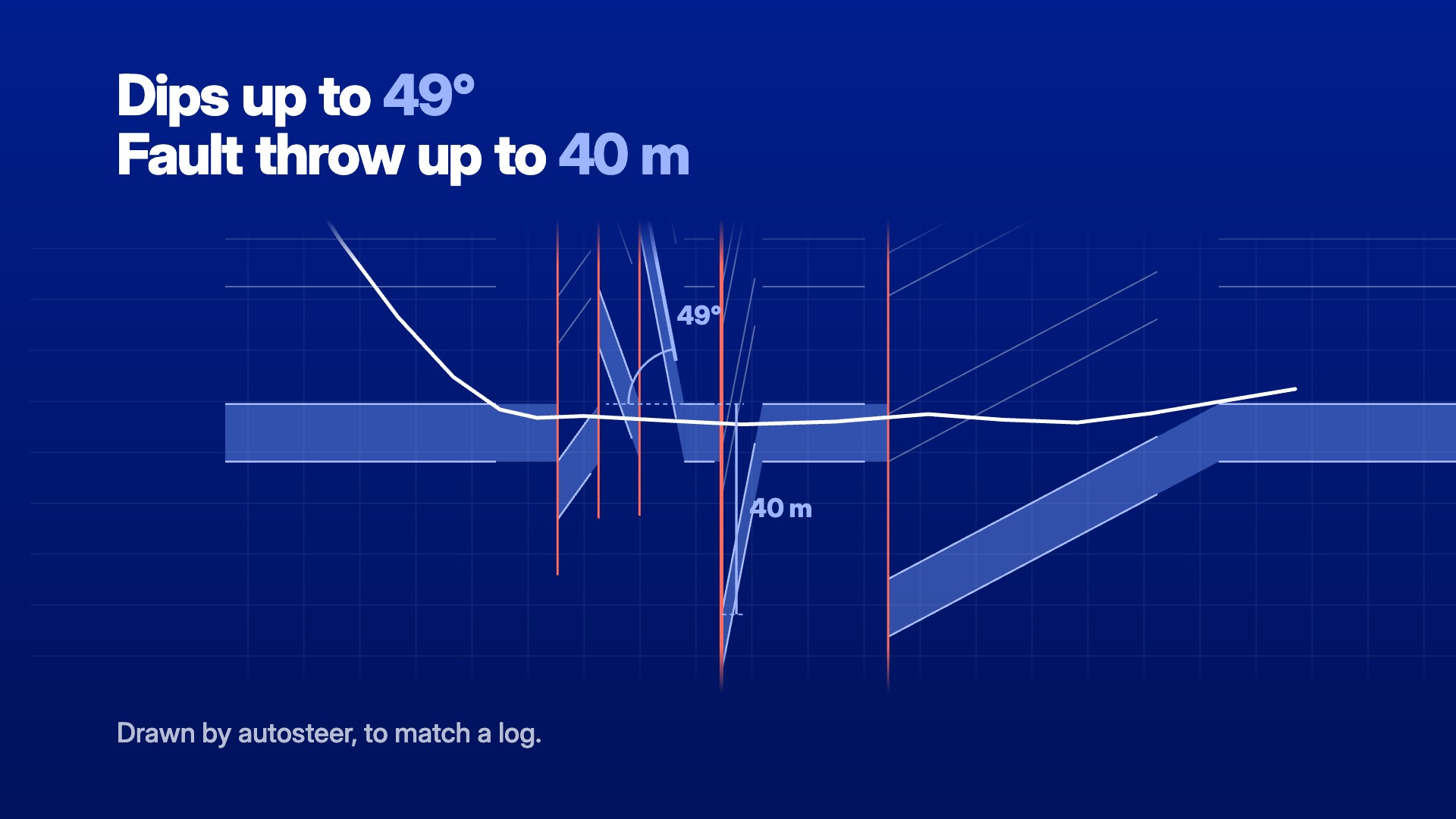
Figure 1. Autosteer's interpretation of the well. It adds dips up to 49° and fault throws up to 40 m so the log matches better.
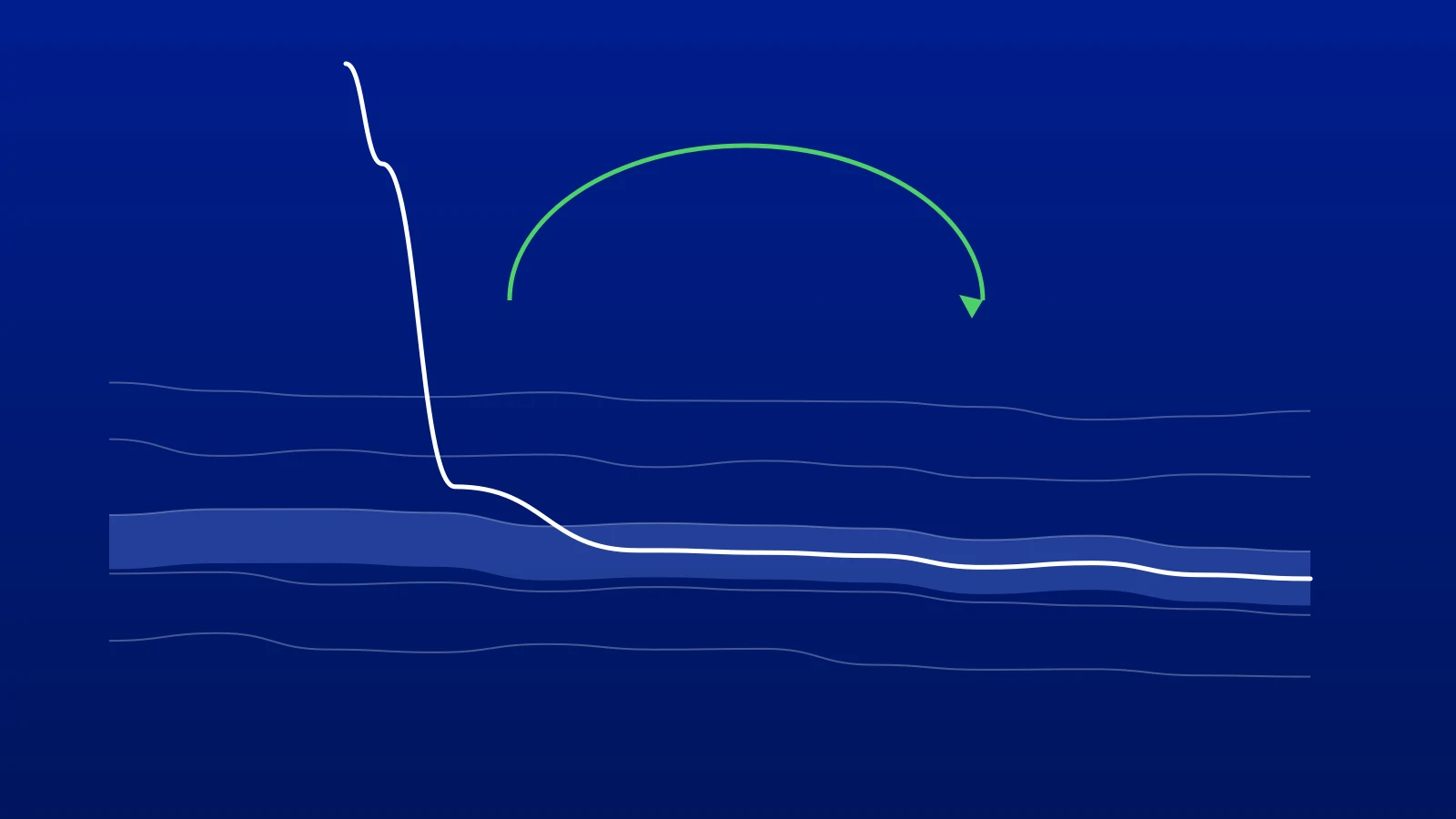
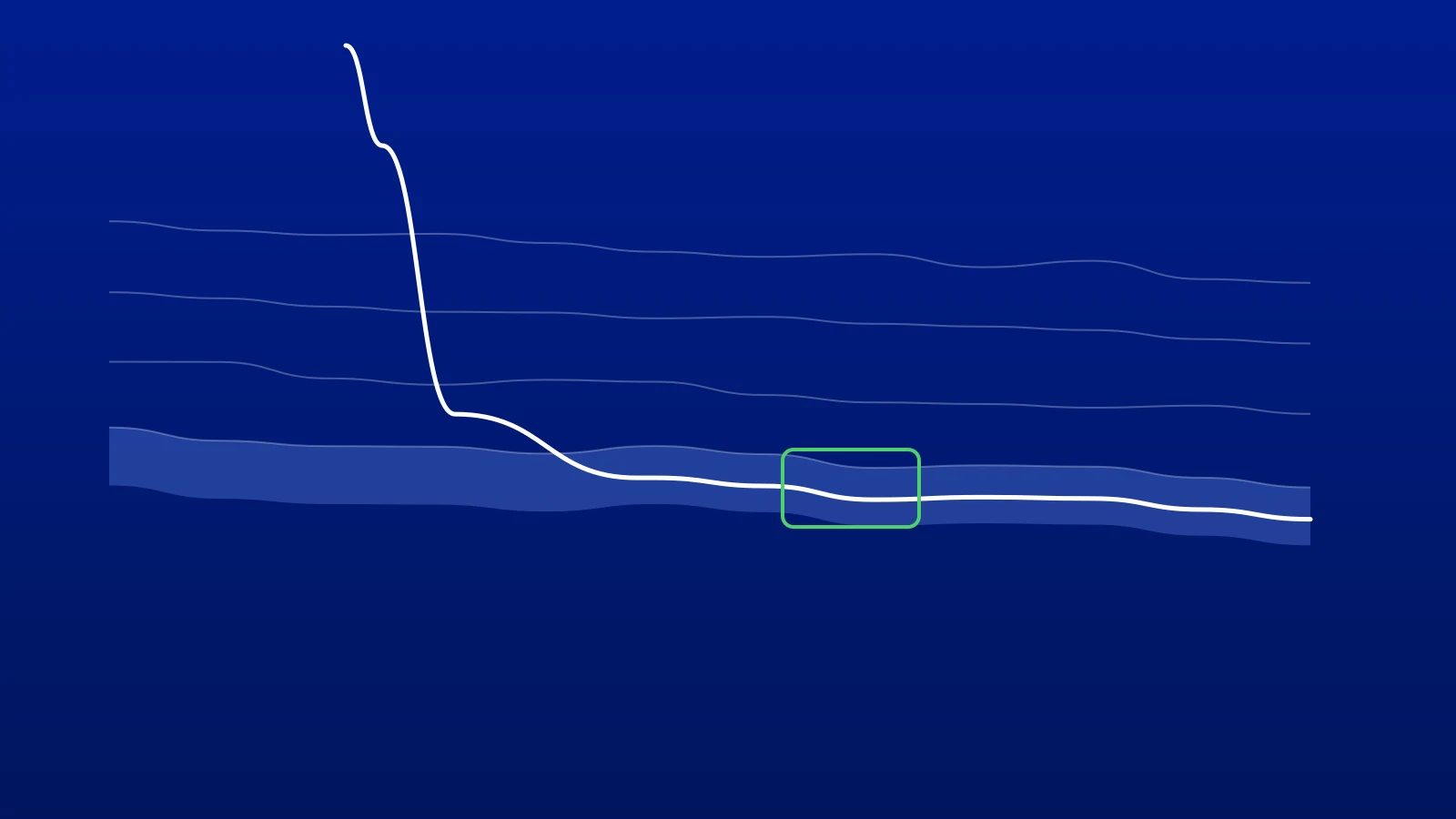
The expert's interpretation of the same well is a smooth, plausible structure that needs no fault at all.
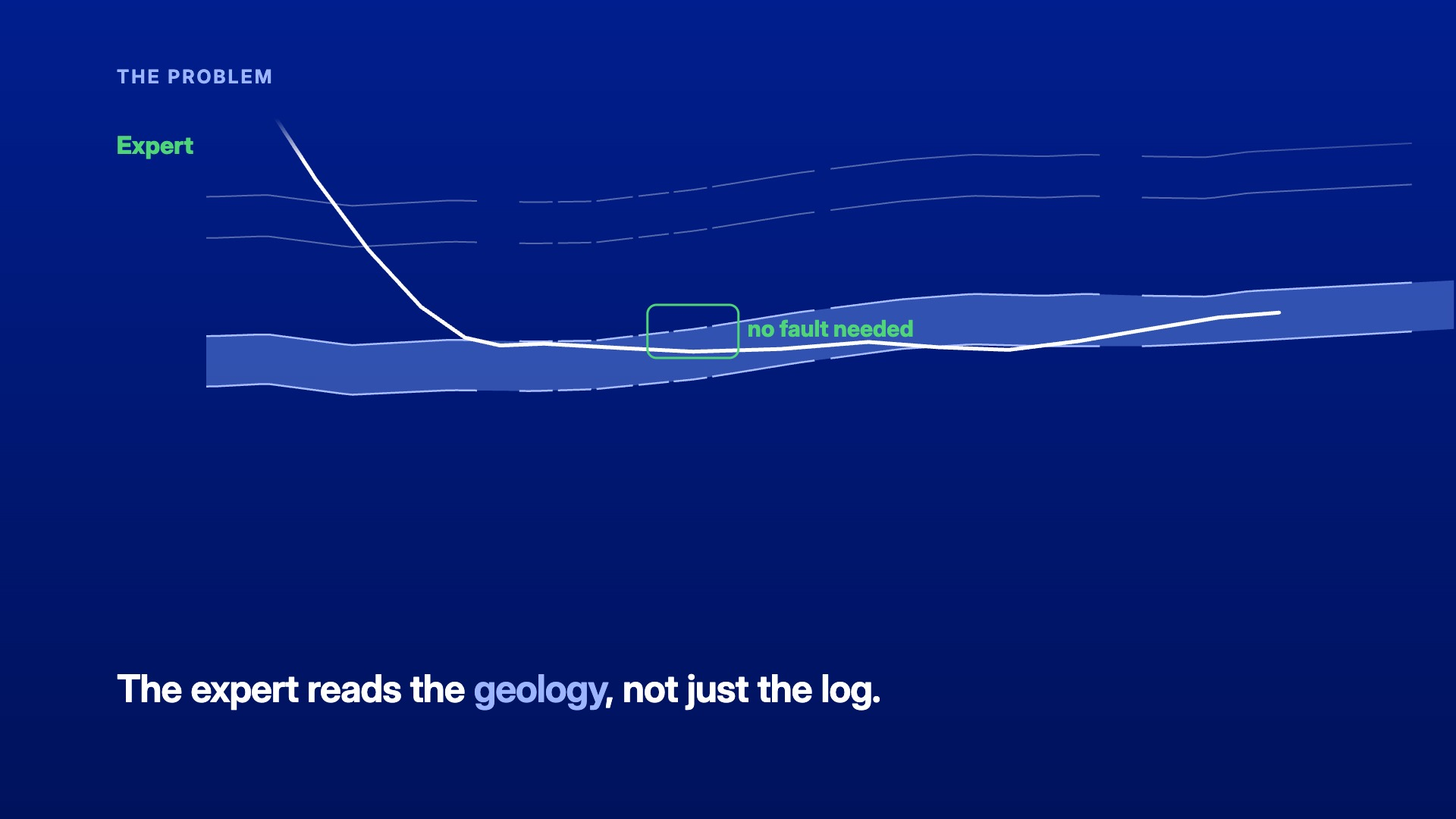
Figure 2. The expert's interpretation of the same well needs no fault. The expert reads the geology, not just the log.
The issue is not that the correlation is wrong. The issue is that the software has no context. It does not know what the field report says about faulting, what dips the geological model allows, or what the drilling data shows. So it chases the match.
What the published work covers, and what it doesn't
Automated interpretation has a substantial literature: Bayesian and ensemble methods (Alyaev et al. 2019; Veettil and Clark 2020; Fossum et al. 2022), drilling response through MSE against rock strength (Pare et al. 2020), and reinforcement-learning interpreters (Muhammad et al. 2025, on sections with at most two faults and dips up to 10°). Human interpretation is far from uniform either: in a study of 329 interpreters, about half scored 30% or less (Cheraghi et al. 2022).
To our knowledge, none of these approaches learns from the interpreter's own decisions, weighs each source of context by how reliable it has proved, or improves across operators without moving their data. That is the gap we set out to address.
How the agent works, one segment at a time
The system works through six steps.
- Analyse. Each segment is measured against a synthetic log built from offset-well gamma ray at the lateral's interpreted true vertical thickness. It measures how far the lateral's log sits from the synthetic log and how much it scatters around it, how much the two logs must be stretched and squeezed to line up (dynamic time warping), and how the lateral compares with the same well's own build section.
- Context. The agent asks what the logs can't answer. Is faulting reported in this field? What dip and thickness does the geological model expect? Which layer is the target? Where did the bit cross a boundary according to ROP, MSE and total gas? The rule we have built and tested is the first one: no fault is made unless the field report clearly states faulting.
- Score. A ranking model (60 small decision trees) scores each version of a segment against its alternatives. Physical rules are built in: a worse fit, a steeper dip or a bigger fault throw can never raise the score.
- Recommend. The agent proposes the changes an interpreter would make: dip (±0.4°, 0.9° or 1.7° on a 100 m segment), thickness (±0.5 or 1.5 m), shifting the whole well (±0.5 to 8 m), or splitting a segment where it fails. A fault is proposed only if the context reports faulting.
- Expert flag. The expert marks each segment good, wrong or unsure. Good teaches the model what the answer looks like. Wrong teaches it what to avoid. Unsure is kept but not used for training.
- Learning. The model retrains on the expert's interpretations and flags, and every well is tested by a model that never saw it.
Only the measured numbers and the flags are kept, never the logs. The data stays with its owner.
How we tested it
For each segment, we hid the expert's interpretation among about 65 changed copies of it (33 to 81, median 65). Each copy is a change an interpreter could make in the software. The model ranks them without knowing which one is the expert's. The full dataset is 12 horizontal wells in 15 projects, 450 segments and about 29,000 alternatives.
What we found
The first result is about correlation itself. Within half a metre of the expert's interpretation, one alternative in three correlates better with the logs than the expert's own. Even 2 to 4 m away, one in four still does. A better log match is not a better interpretation, and that is exactly why experts don't chase it.
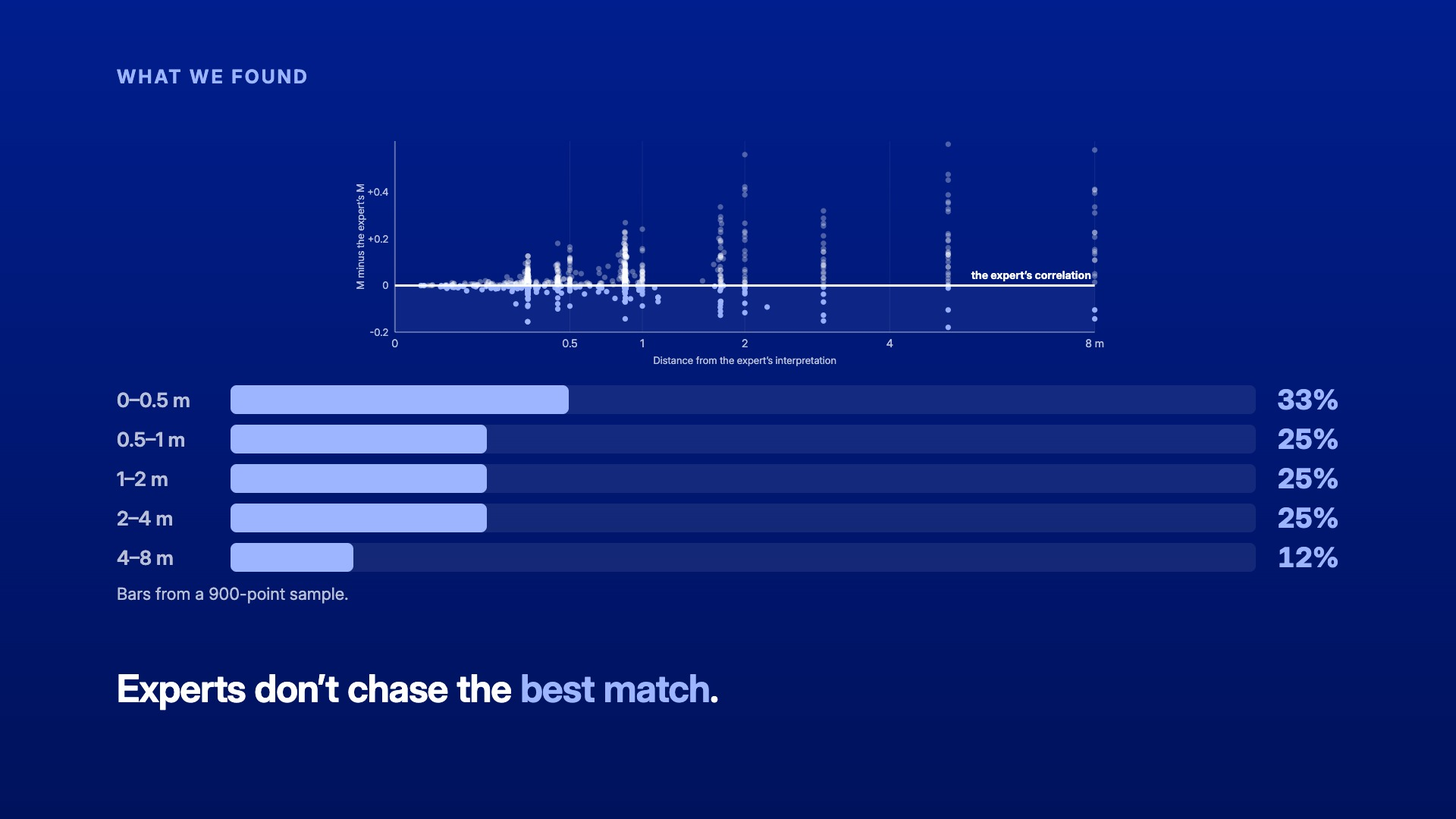
Figure 3. Share of alternatives that match the logs better than the expert's interpretation, by distance from it: 33% within 0.5 m, 25% at 0.5 to 1 m, 1 to 2 m and 2 to 4 m, and 12% at 4 to 8 m. Each band is its own share, so the bars don't add up to 100%. Bars from a 900-point sample.
The second result is an honest one. On the first six unseen wells (62 segments), the model trained on the expert's decisions is level with correlation alone:
- Expert ranked first: 3 of 62 by the model, 1 of 62 by correlation
- Median rank of the expert: 13.5 by the model, 15 by correlation (a random pick would put it at about 33)
- Segments where each placed the expert higher: 23 for the model, 37 for correlation, which is not statistically significant (p = 0.09)
The model already respects dip and fault throw and learns from the expert's flags. It still sees only logs and structure. The geological model and drilling data are not in it yet, which most likely explains the tie.
What this study does not show yet
We were clear about the limits in the talk, and they belong here too. These are first results from 6 of 12 wells, in two fields, using gamma ray only. Differences below a metre may be within the gamma ray's vertical resolution and survey TVD uncertainty. One expert per well is treated as the truth, although interpreters disagree widely. The alternatives are changed copies of the expert's interpretation, and while drilling there is no expert interpretation to start from. The wells were interpreted after drilling, and there is no while-drilling test yet. There were no faulted sections, and faults come only from an explicit field report, so unreported faults cannot be found.
What comes next
The next step is context: the geological model and drilling data, plus features that are not similarity measures, such as dip plausibility and smoothness against neighbouring segments. We also plan a synthetic benchmark with a known truth, several interpreters per well, and independent checks from pilot holes, image logs and later wells.
We see this as a staged path, much like autonomous driving: perception (analysing and ranking a segment, which is what this talk covered), then prediction of the formation ahead of the bit, then planning the well path, then control within steering limits. Each stage follows only when the one before it is proven in the field.
Work with us
We are looking for operators with horizontal wells and their experts' interpretations, interpreters willing to flag segments, and researchers. Each test runs on your wells, and your data stays yours.
Thank you to the London Petrophysical Society for the platform and to everyone who joined the discussion afterwards.
Greenstone Energy Ltd builds GeoMaster® for well placement teams. Request a 14-day GeoMaster Pro trial. We approve requests within 1 working day.
Works cited
- Alyaev et al. 2019, Journal of Petroleum Science and Engineering 183, 106381.
- Veettil and Clark 2020, Petrophysics 61(1), 99 to 111.
- Fossum et al. 2022, Journal of Computational Science 65, 101876.
- Pare et al. 2020, ADIPEC, Abu Dhabi.
- Muhammad et al. 2025, SPE Journal 30(3).
- Cheraghi et al. 2022, URTeC 3722510.
Frequently asked questions

Written by Mohamadmehdy Ahi, Co-founder and CEO, Greenstone Energy Ltd
Geosteerers and drilling engineers building geosteering software in the browser. Meet the founders →
Work With Us
Run your next well in GeoMaster. Start on the free plan, or request a 14-day Pro trial: we approve requests within 1 working day and you won't need a card.